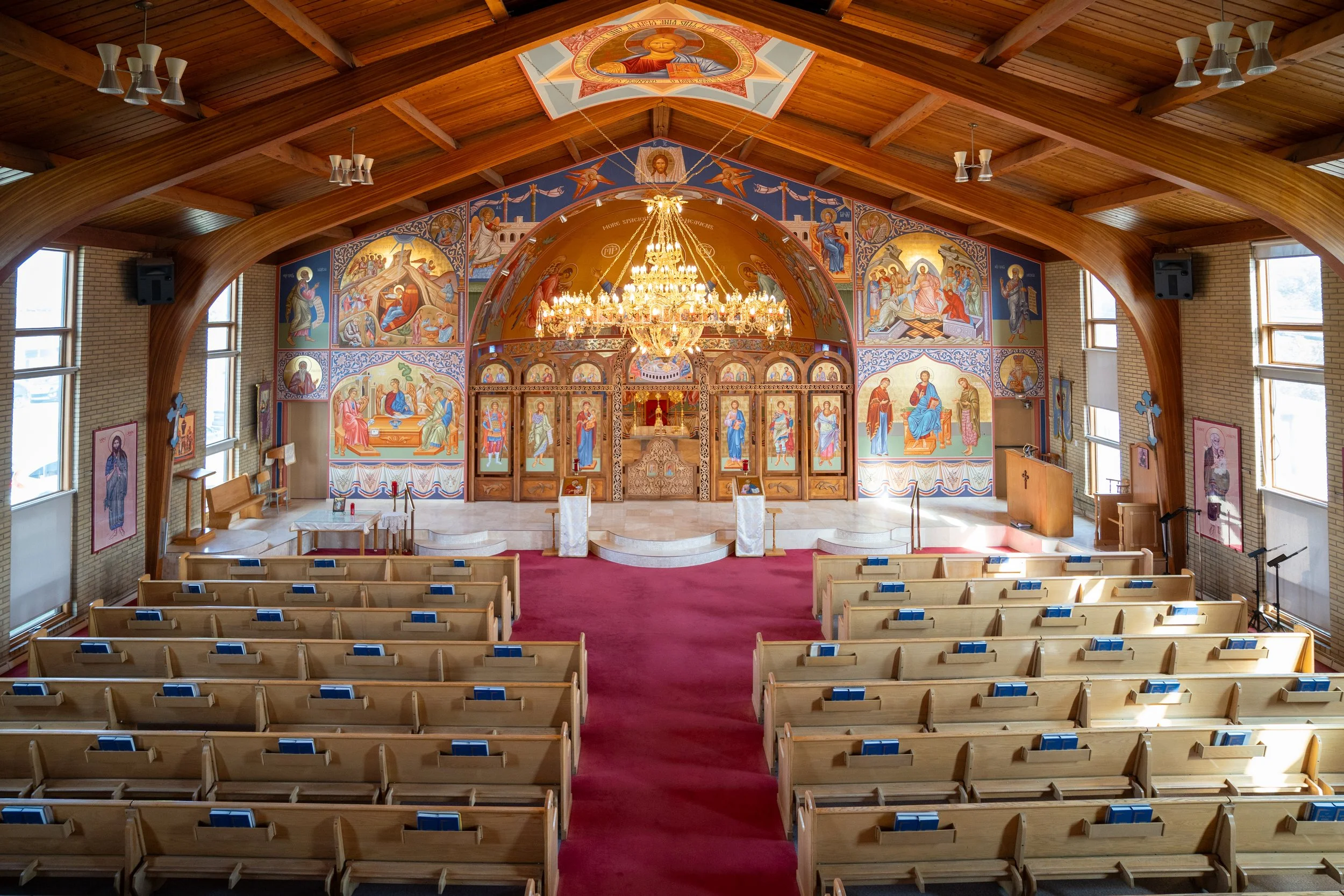
Our Icons
I do not venerate the creation over the creator, but I venerate the creator who became creation like me, and came down into creation without humiliation and without being debased, in order to glorify my nature and make me to be partaker of the divine nature .... For the nature of flesh has not become deity, but, as the Word became flesh without change, remaining as he was, likewise the flesh became Word, without losing what it is, identifying moreover with the Word hypostatically. Thus, taking courage, I represent God, the invisible, not as invisible, but insofar as he has become visible for us by participation in flesh and blood. I do not represent the invisible deity but I represent the flesh of God which has been seen.
-St. John of Damascus
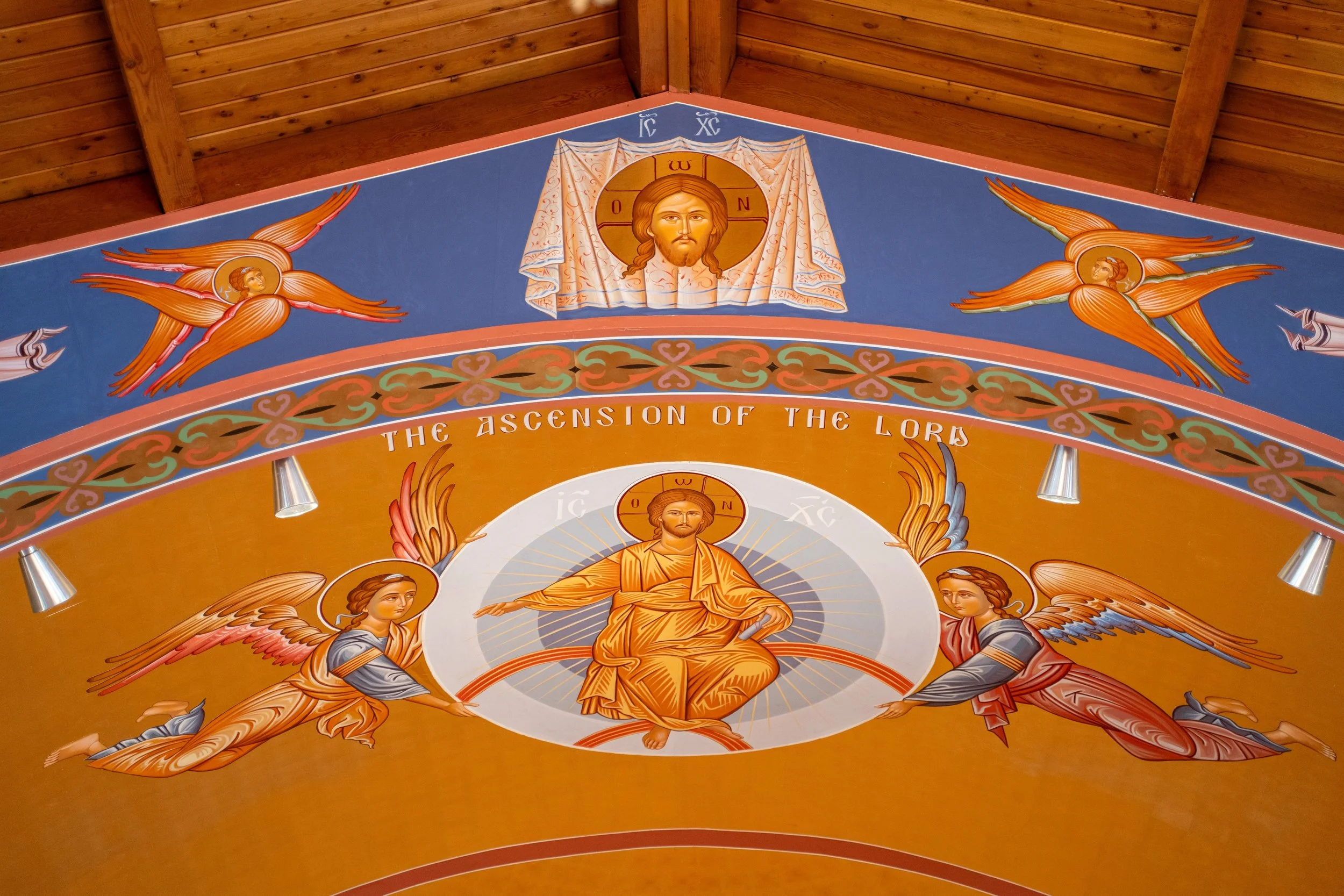
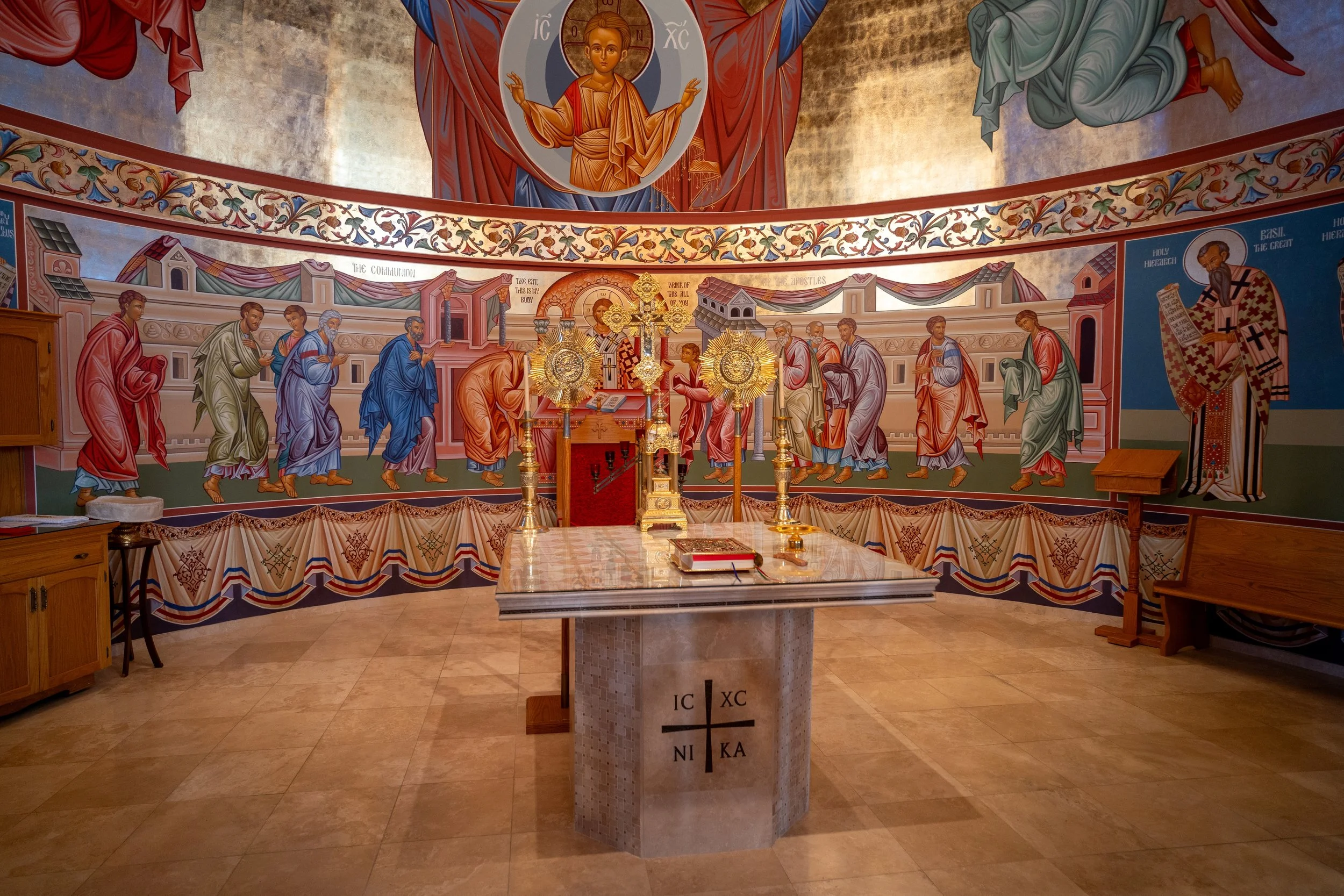
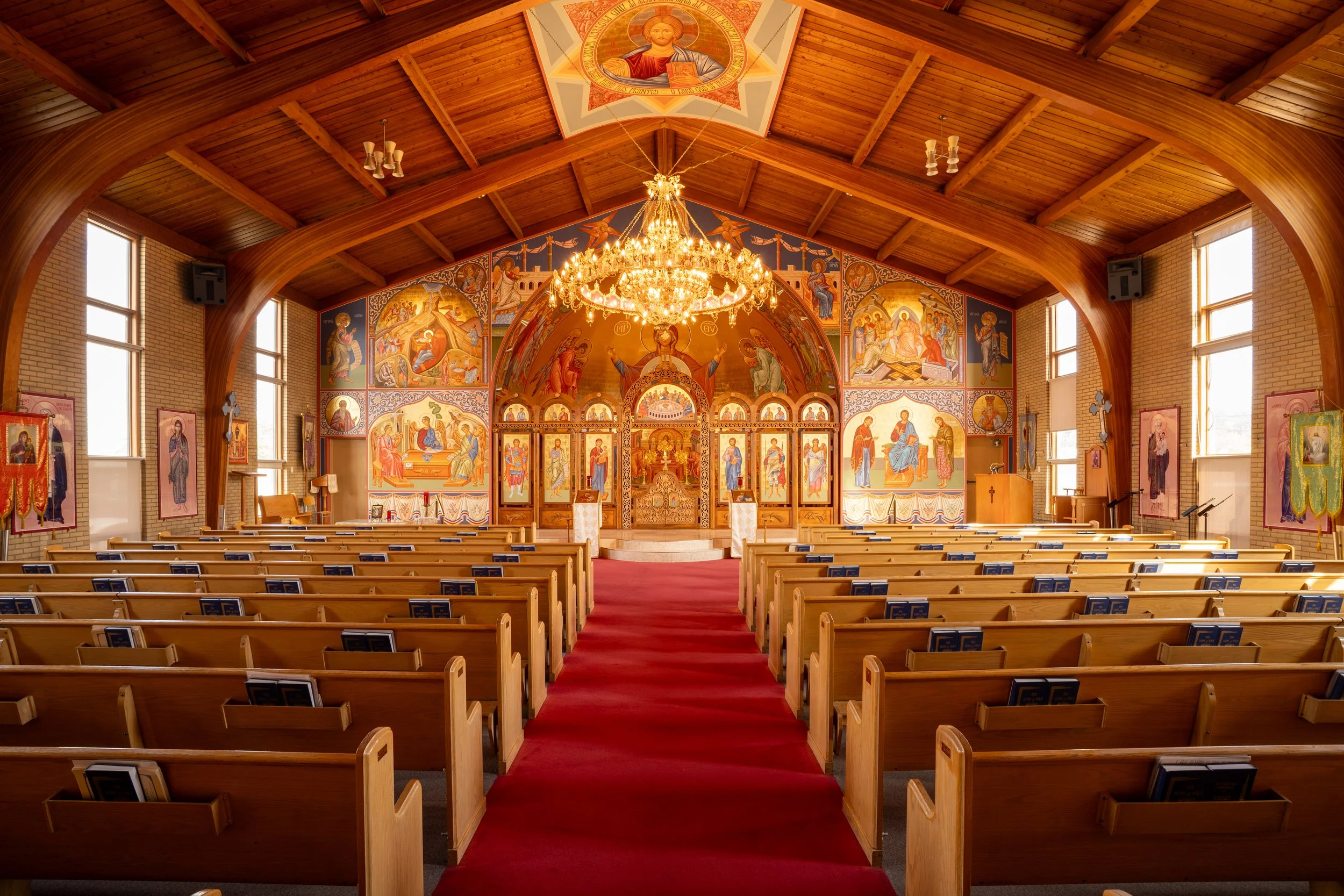
-
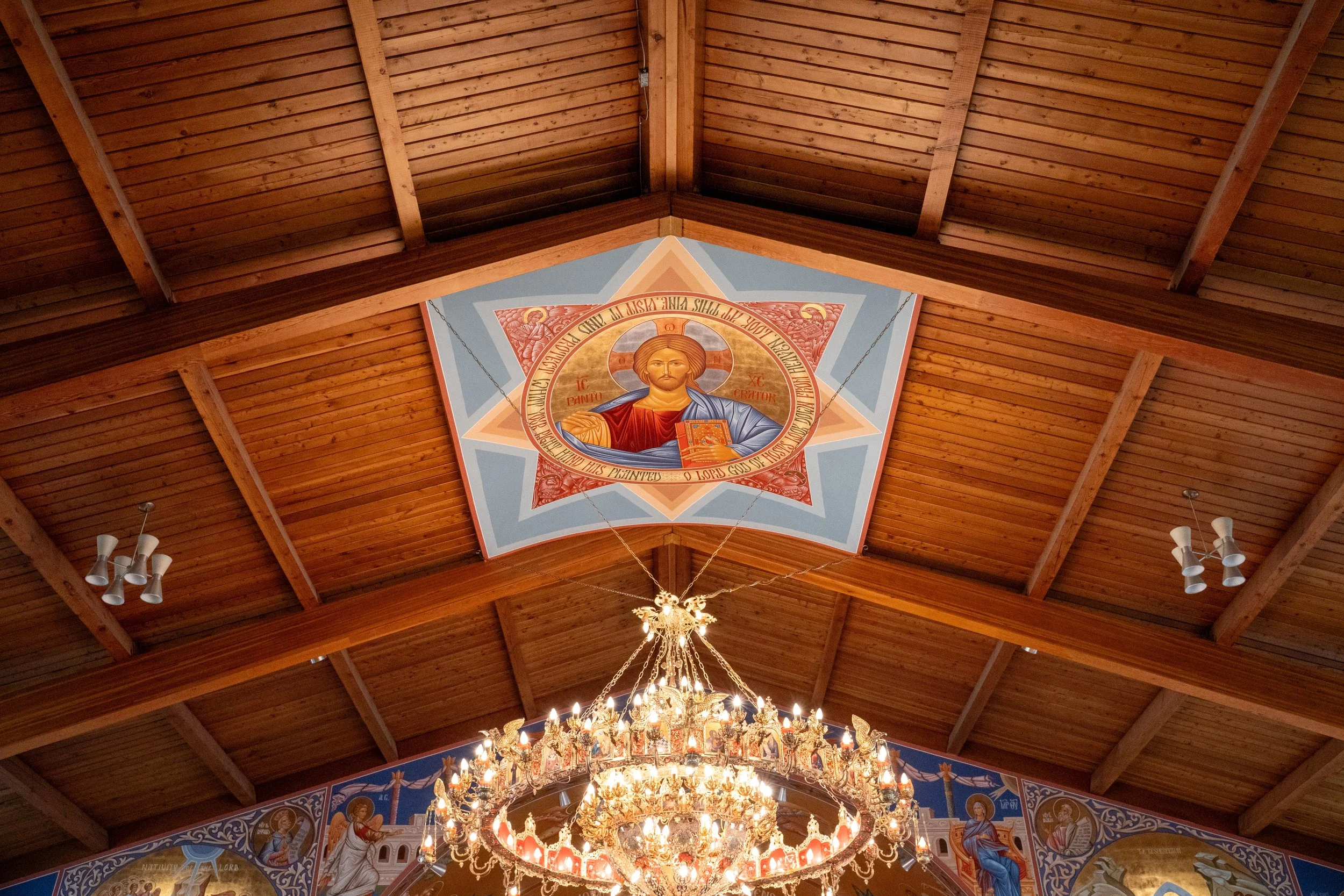
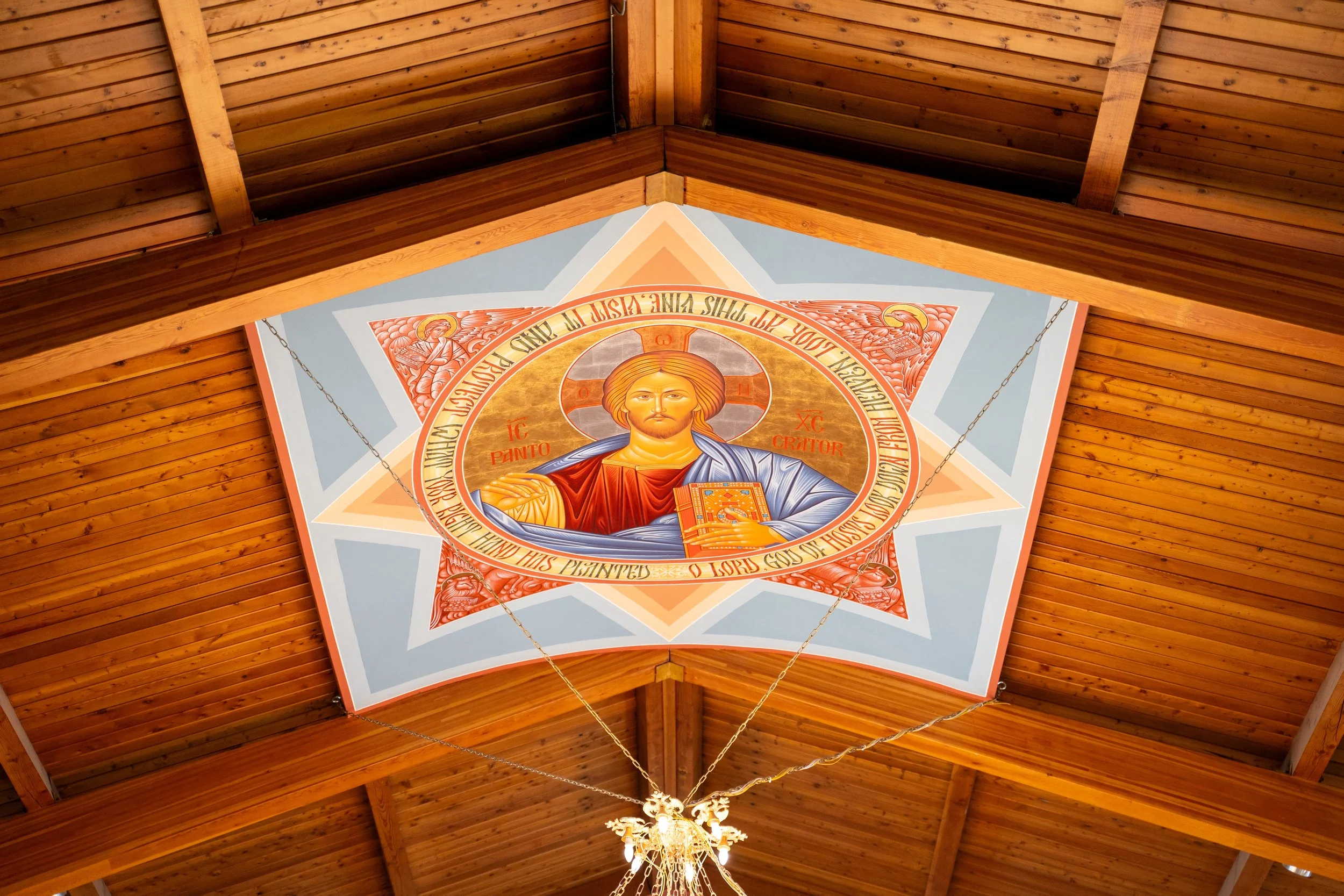
The Meaning of "Pantocrator"
Definition: The word Pantocrator translates to "Almighty" or "All-powerful."
Biblical Roots: * In the Septuagint (the Greek version of the Old Testament, known as the LXX), pantocrator is used to translate the titles "Lord of Hosts" and "God Almighty."
In the Book of Revelation, the term appears nine times as a title specifically emphasizing God’s ultimate sovereignty and power.
Theological Significance and Imagery
The Ruler of All: The Christ Pantocrator icon highlights Jesus’ omnipotence—His absolute power to do anything and His role as the one who sustains all of creation.
Roman Influence: Early Christians adapted cultural symbols to proclaim the power of the resurrected Christ. The specific symbolism of the Pantocrator borrows directly from Roman imperial imagery to visually project His sovereign authority.
The Significance of Placement
The Apse: The traditional location of the Christ Pantocrator icon in the apse (the curved wall of the front sanctuary) carries deep theological weight.
The Roman Basilica: Byzantine churches were architecturally patterned after the Roman basilica, which originally served as a king’s chamber for holding court.
The Seat of Authority: In the basilica setting, the apse was the designated position of authority where the ruling official sat. By placing Jesus in the apse, the Church visually declares that He is the legitimate ruler, the sovereign judge over all, and the true Pantocrator.
-
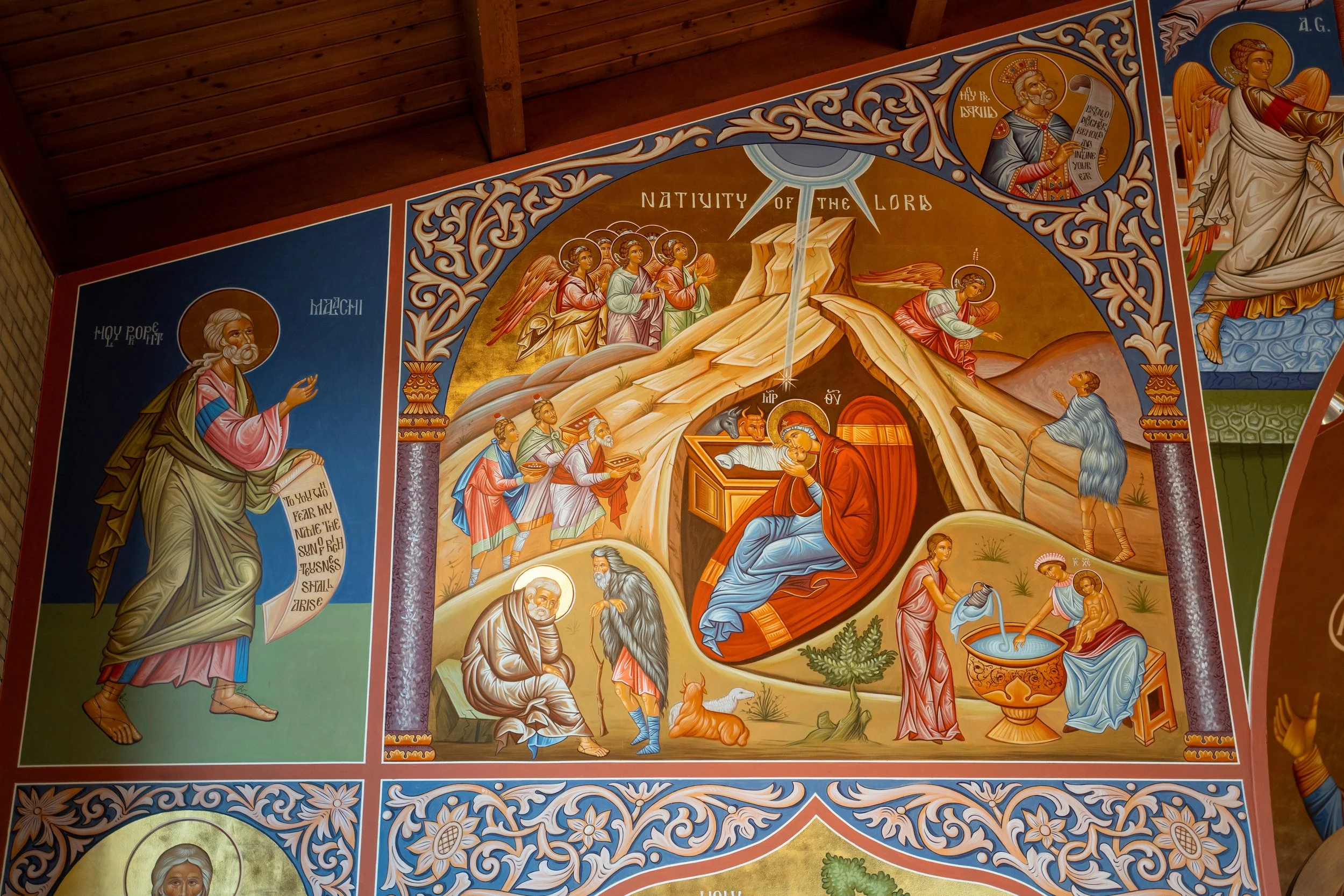
Central Figures and Setting
The Manger: In the center is the infant Christ lying in a manger.
The Attendants: The Virgin Mary (Theotokos) is positioned beside Him, with an ox and an ass standing behind Him.
The Cave: While Christ being born in a cave is not explicitly mentioned in the Bible, it is a deeply rooted ancient tradition dating back to the first and second centuries.
The star: Above Christ is a star sending a ray of light upon Him - the star that led the wise men to Jesus’ birth (Mathew 2:1-2).
Saint Joseph: There are two common understanding of what is taking place here:
After the birth of Jesus, he walked out of the cave, battling doubts. The old man next to him is supposed to be the devil who is, of course, filling his mind with all sorts of doubts and angry thoughts.
Before the birth of Jesus, he was in contemplation of what to do with Mary and whether or not to take her as his wife. Then, “while he thought on these things, behold, the angel of the Lord appeared unto him in a dream, saying, Joseph, thou son of David, fear not to take unto thee Mary thy wife: for that which is conceived in her is of the Holy Ghost” (Matthew 1:19-20).
Prophet Malachi: Depicted next to the Nativity Icon, facing it and holding a scroll that reads: “to you who fear My name, the Sun of Righteousness shall arise“ (Malachi 3:20).
Magi: On the left, the three wise men are traveling from afar, following the star in the sky.
Angel and Shepherd: “And there were in the same country shepherds abiding in the field, keeping watch over their flock by night. And, lo, the angel of the Lord came upon them, and the glory of the Lord shone round about them: and they were sore afraid. And the angel said unto them, Fear not: for, behold, I bring you good tidings of great joy, which shall be to all people. For unto you is born this day in the city of David a Saviour, which is Christ the Lord” (Luke 2:8-11)
Foreshadowing Death and Resurrection
Burial Clothes: The infant Christ is depicted dressed in burial bands rather than standard swaddling clothes, directly foreshadowing His future death.
The Cave as a Tomb: The dark cave setting also foreshadows the rock-hewn grave in which He would eventually be buried and from which He would resurrect.
The Fall and the Incarnation
The Garments of Adam and Eve: When Adam and Eve were first created, their natural state was to be clothed in the glory of God. When they fell into sin, they lost this divine clothing, became aware of their nakedness, and were clothed in animal skins (which represent death) as they went into exile outside the Garden.
Christ’s Condescension: Just as humanity was exiled, Christ condescended from His state of glory to become one of us, effectively exiling Himself from heaven.
Taking on Mortality: He willingly wrapped Himself in the sin and death of mortal flesh. As Scripture states, "God made Christ who knew no sin to be sin for us, that we might become the righteousness of God in Christ" (2 Corinthians 5:21).
-
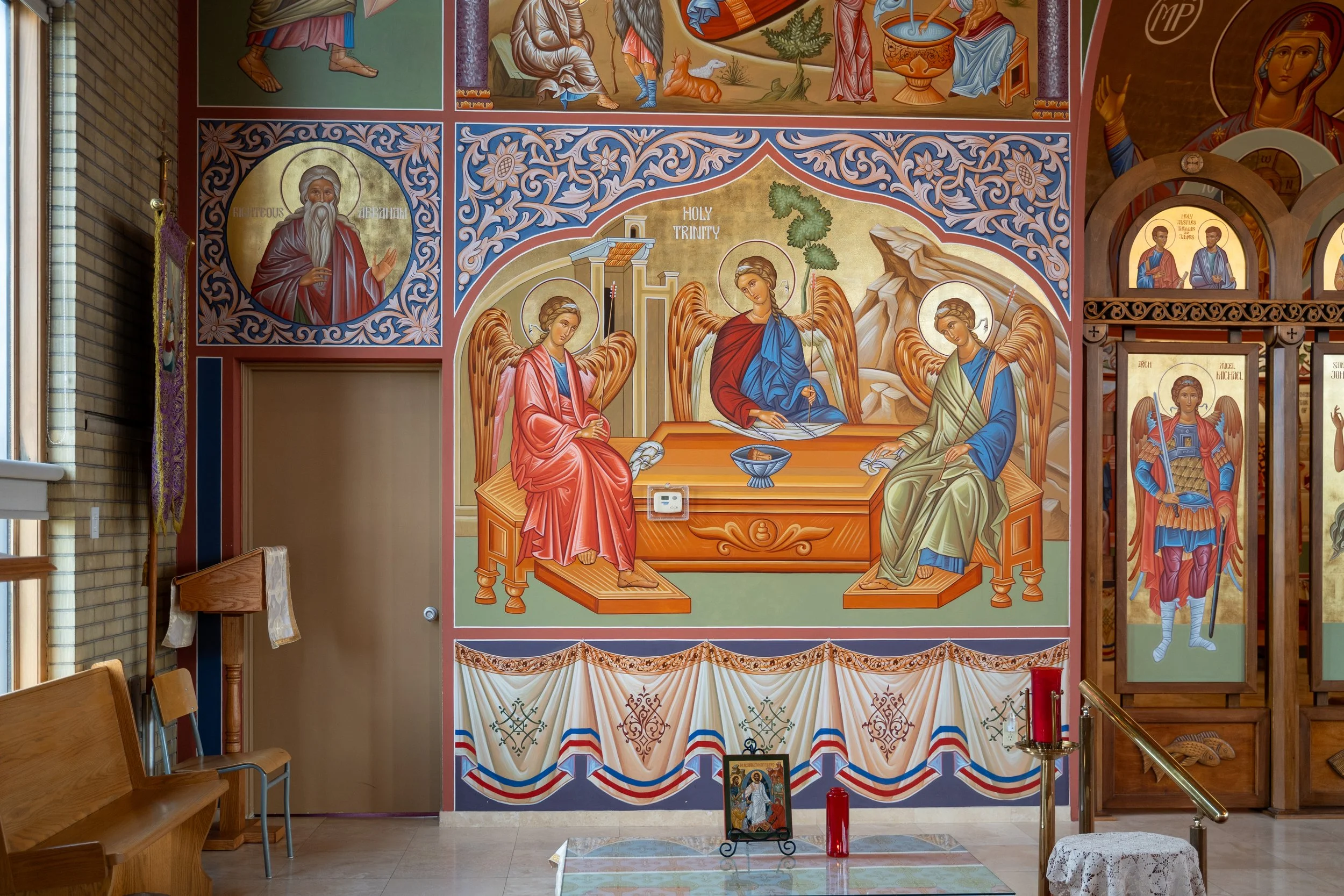
As Abraham sat at the entrance of his tent in the heat of the day…
…he looked up and saw three angels standing near him. When he saw them, he ran from the tent entrance to meet them and bowed down to the ground.
He said, “My lord, if I find favor with you, do not pass by your servant. Let a little water be brought and wash your feet. Rest yourselves under the tree. Let me bring a little bread, that you may refresh yourselves and after that you may pass on—since you have come to your servant.”
So they said, “Do as you have said.”
And Abraham hastened into the tent to Sarah and said, Make ready quickly three measures of choice flour, knead it and make cakes. Abraham ran to the herd and took a calf, tender and good, and gave it to the servant, who hastened to prepare it. Then he took curds and milk and the calf that he had prepared, and set it before them; and he stood by them under the tree while they ate.
– Book of Genesis, Chapter 18
-
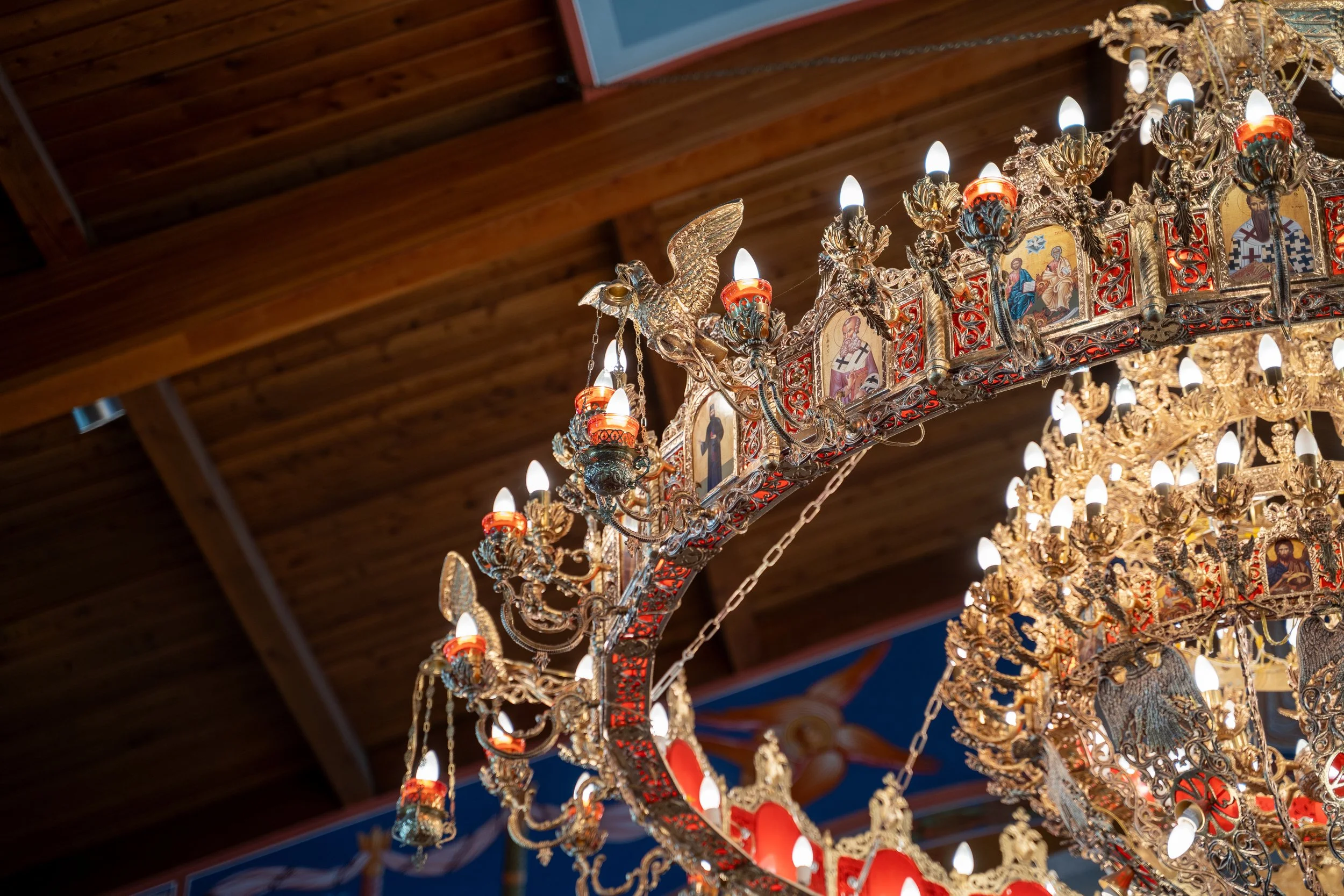
Visual Symbolism
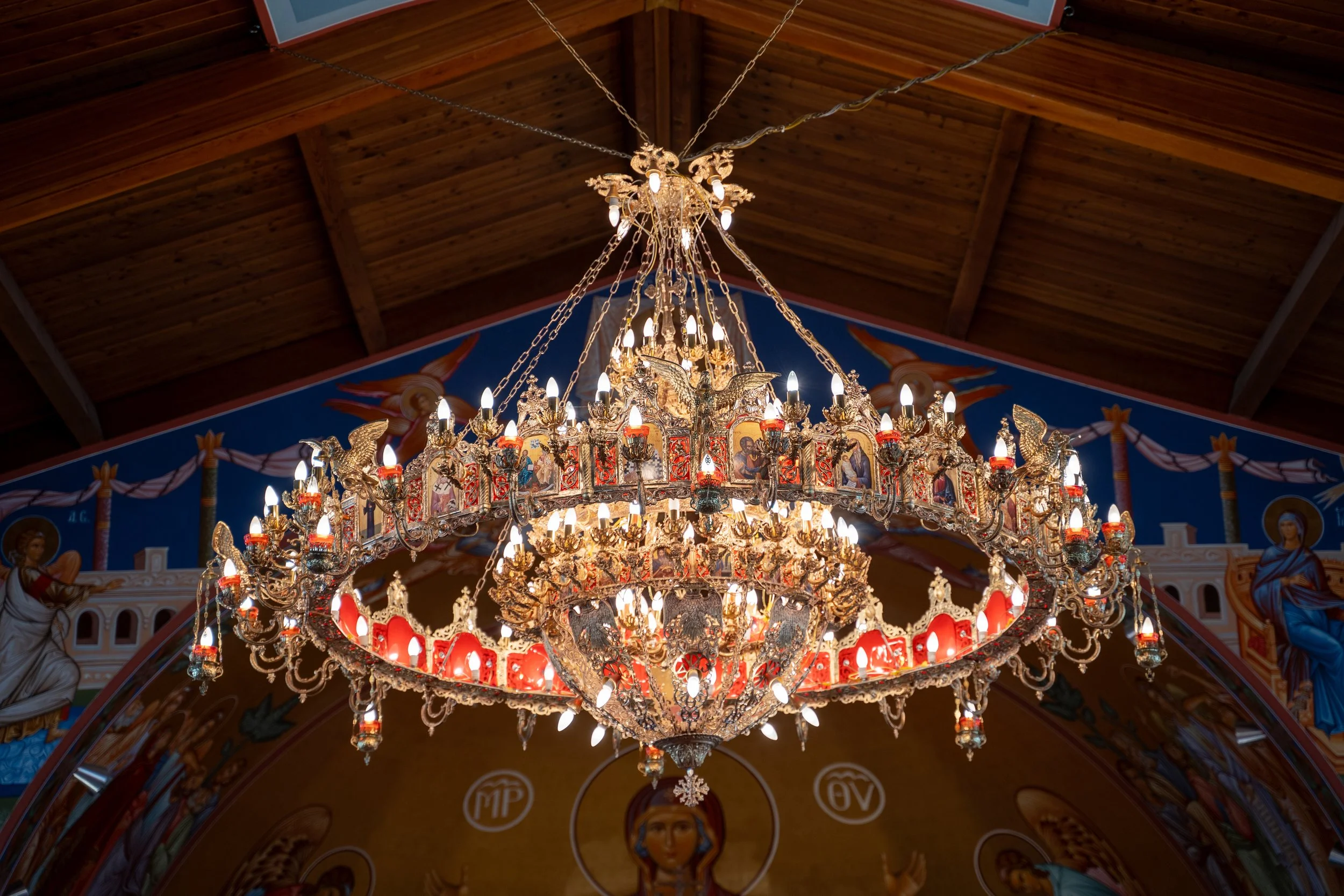
The Circle: The circular shape itself represents the eternal and perfect realm of heaven.
The Candles (or Lights): These symbolize the angels and the souls of righteous people who provide spiritual enlightenment and guidance to those of us on earth.
Biblical Connections
Shining as Lights in the World: The illumination of the candles visually echoes the call in Philippians 2:14-16 for believers to live blamelessly: "...that you may become blameless and harmless, children of God without fault in the midst of a crooked and perverse generation, among whom you shine as lights in the world, holding fast the word of life..."
Reflecting Heavenly Joy: The radiant lights reflect the joy of the faithful in Christ, mirroring the divine celebration described in Luke 15:6-7: "I say to you that likewise there will be more joy in heaven over one sinner who repents than over ninety-nine just persons who need no repentance."
The Stars of the Promise: The multitude of lights suspended above also reminds the faithful of the stars in the night sky. This reinforces God’s ancient covenant with Abraham and Isaac from Genesis 26:4: "I will make your descendants multiply as the stars of heaven; I will give to your descendants all these lands; and in your seed all the nations of the earth shall be blessed."
-
Central Symbolism of Christ
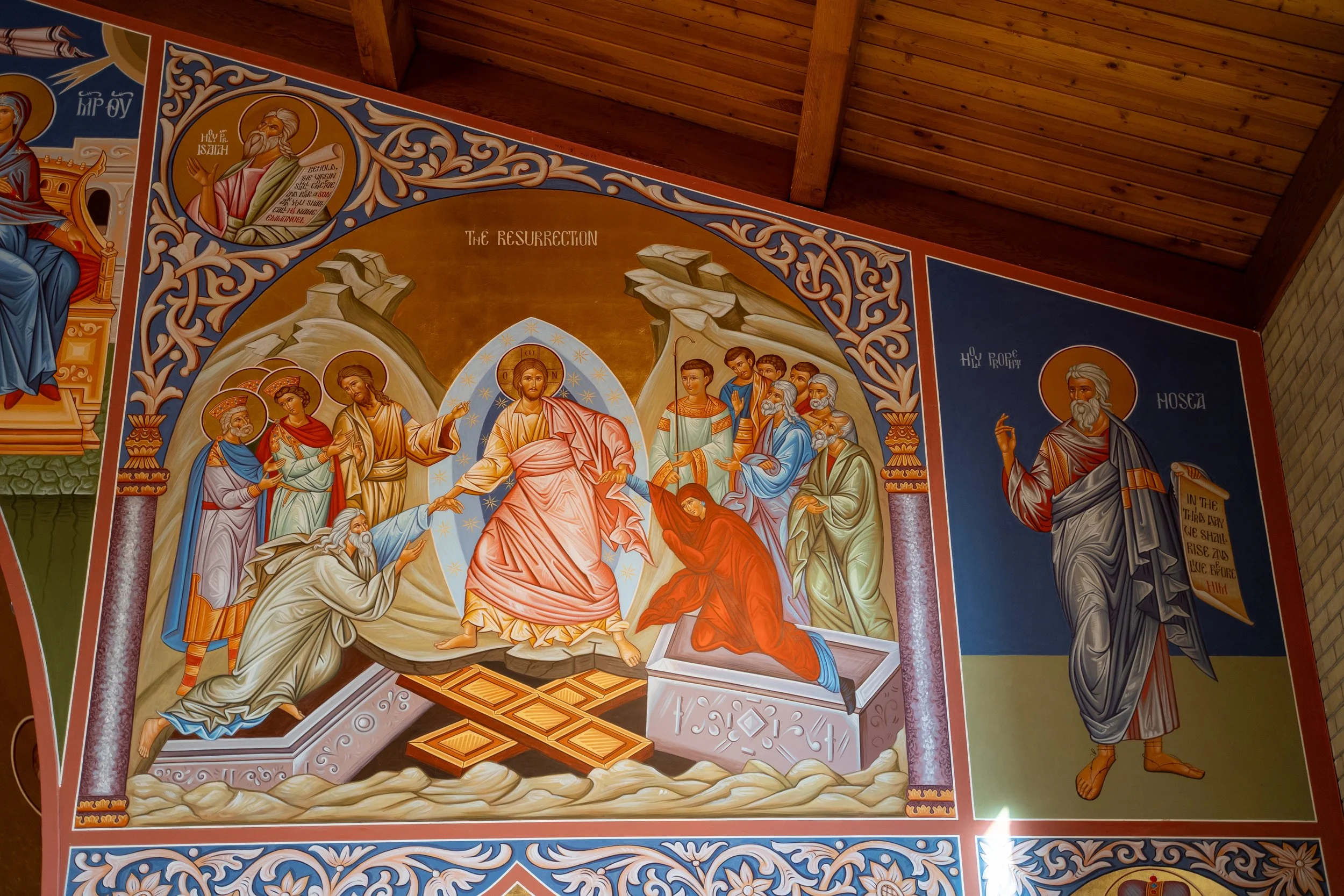
The Mandorla: The striking blue shape surrounding Christ is called the Mandorla, representing His uncreated divine glory and light.
Christ’s Robe: His cape or robe is depicted flowing upward. This dynamic movement symbolizes His rapid and radical descent into Hades to save those who have died in the flesh.
The Gates of Hades: The golden doors lying in ruins beneath His feet represent the gates of Hades, which Christ has forcefully broken and torn apart.
The Resurrection of Humanity
Adam and Eve: The two figures Christ is grasping and pulling from their tombs are Adam and Eve. This powerful gesture symbolizes His victory over death, redeeming all mankind straight back to the beginning of creation. It also serves to foreshadow the general resurrection of the body that will occur before the Final Judgment.
The Witnesses and Prophets
Figures to the Left: Three key figures are typically shown on the left side:
David and Solomon: Two of Christ's royal ancestors according to His fleshly, earthly lineage.
St. John the Baptist: Positioned closest to Christ, representing his role as the forerunner in both life and death.
Figures to the Right: The individuals on the right side vary from icon to icon, but they traditionally represent the Old Testament prophets who foretold the coming of the Messiah.
-
The Incarnation and the Title "Theotokos"
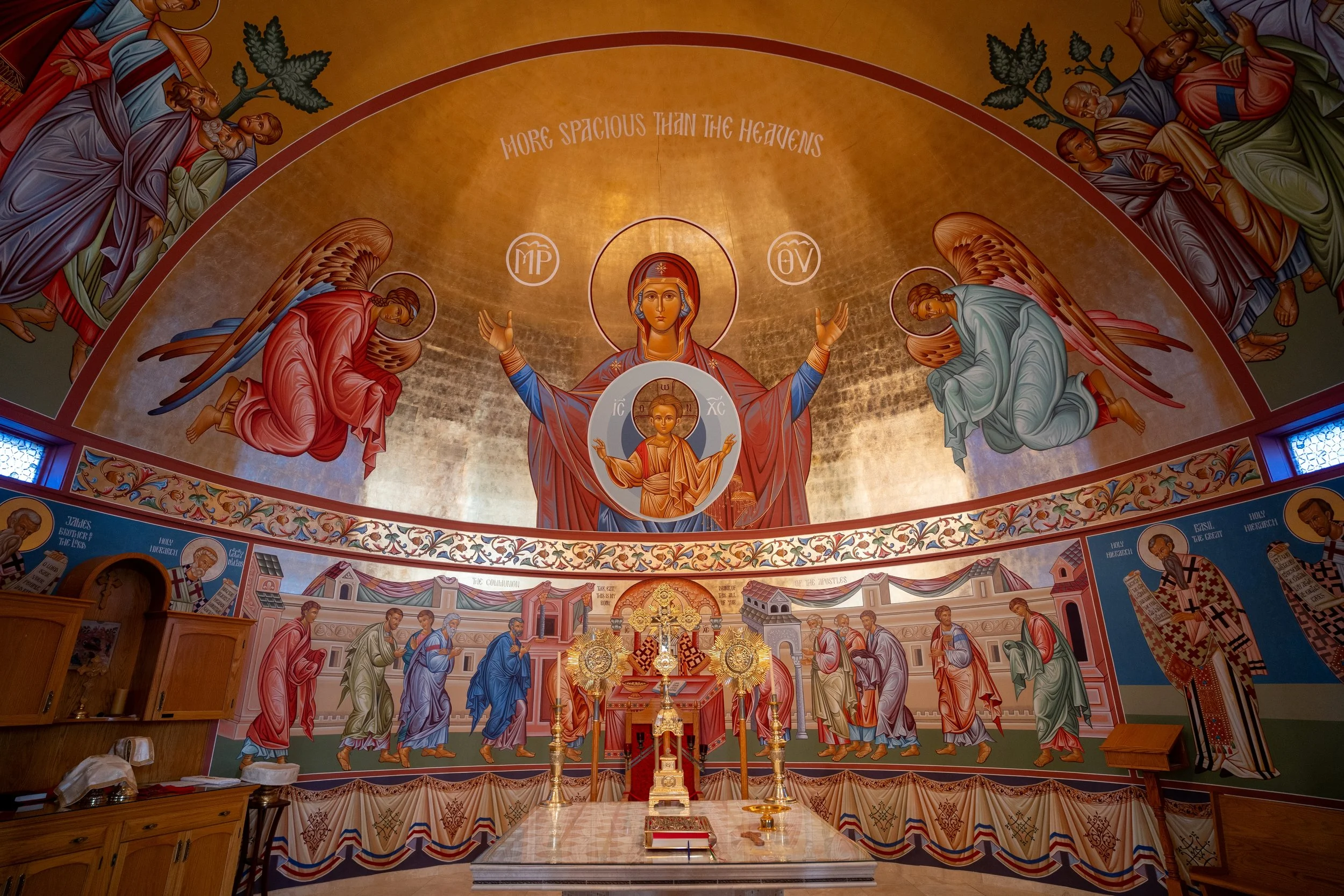
A Visual Teaching: The Platytera is not just a beautiful image; it is an active reminder that God became man in actuality, not just symbolically or metaphorically.
The Second Person of the Trinity: Mary did not give birth to a mere man who was later adopted or filled with God's Spirit. She gave birth to the Second Person of the Trinity, fully God and fully human from the moment of conception.
Theotokos (God-Bearer): This title is as much a Christological declaration as it is a Marian one. The icon proclaims a core truth: if Mary is not the Mother of God, then Jesus is not God.
Mary’s Intercessory Role
Between Heaven and Earth: Mary is depicted standing with her hands raised in prayer, simultaneously presenting Christ to us and presenting our prayers to Him.
The First Christian: While she is not worshipped, she is deeply honored as the first Christian—the one whose obedient "yes" to God’s plan made the Incarnation possible.
Connection to the Liturgy and Eucharist
Placement Above the Altar: When standing in church during the Divine Liturgy, the icon's position above the altar is meant to draw the mind upward.
The Eucharistic Parallel: The icon visually connects the Incarnation to Communion. The same Christ who was contained in Mary’s womb is present on the altar in the Eucharist. The God who became small enough to be contained in a virgin’s body becomes small enough to be contained in bread and wine, and ultimately, to enter into you when you commune.
Heaven Drawn Near: The mystery proclaimed here is that heaven is not far away. It came near in Bethlehem, and it comes near every time the Divine Liturgy is celebrated.
A Window Into Heaven
The Whole Gospel: As Metropolitan Kallistos Ware once wrote, icons are "windows into heaven," and the Platytera might be the clearest window of all.
More Spacious Than the Heavens: Looking through this icon reveals the entire gospel message: "God with us," carried by a young woman from Nazareth who, by containing the uncontainable God, became more spacious than the heavens themselves.
-
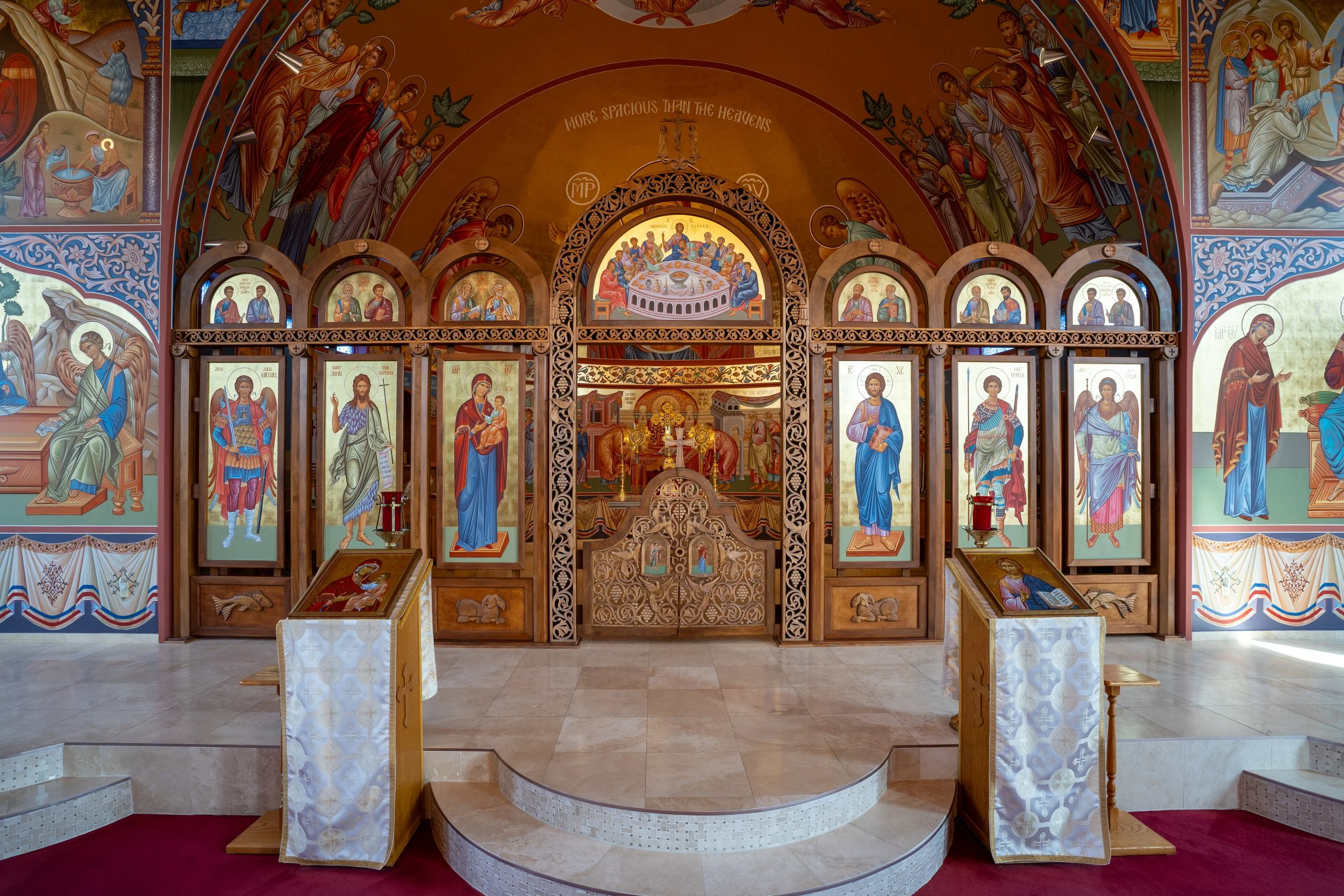
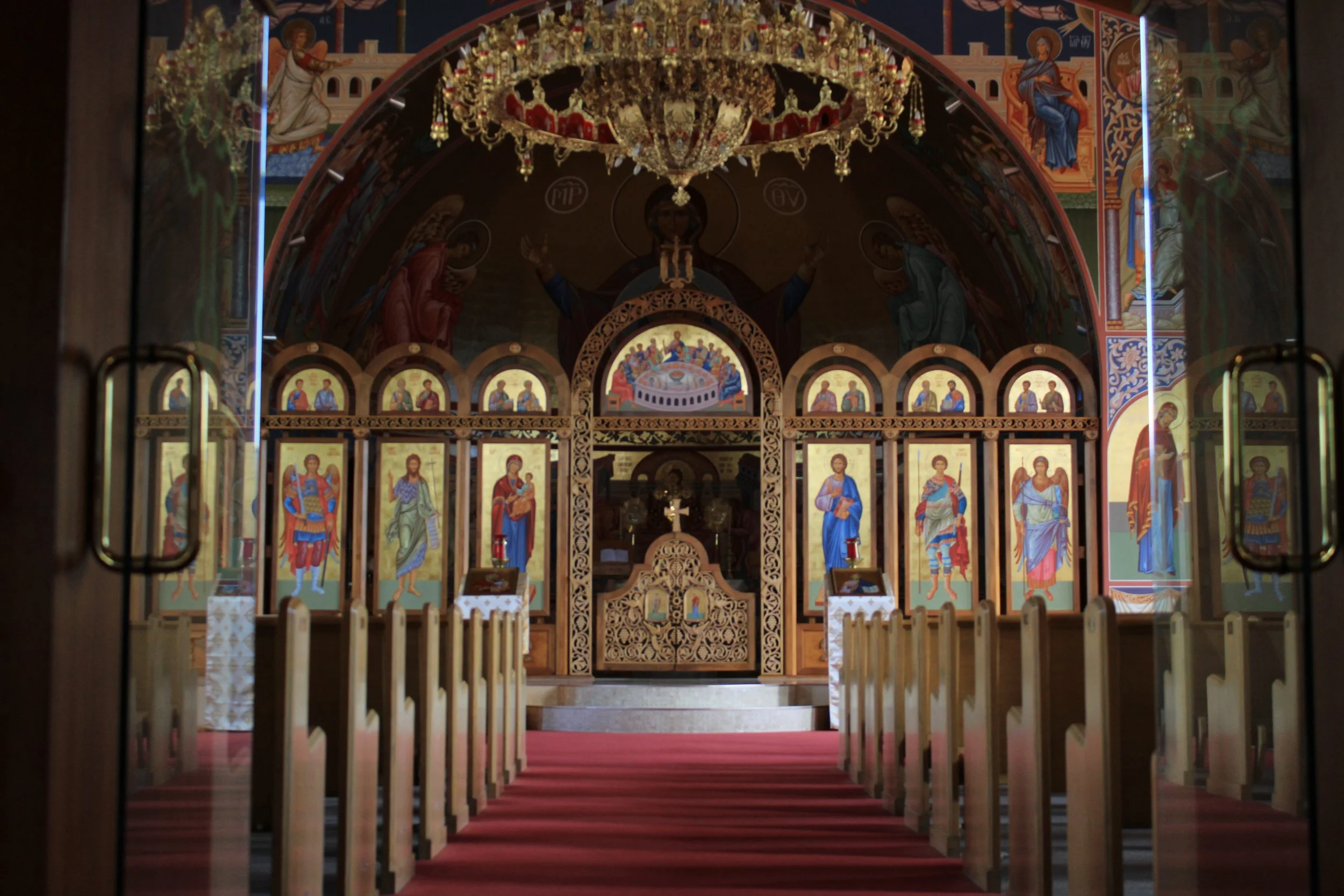
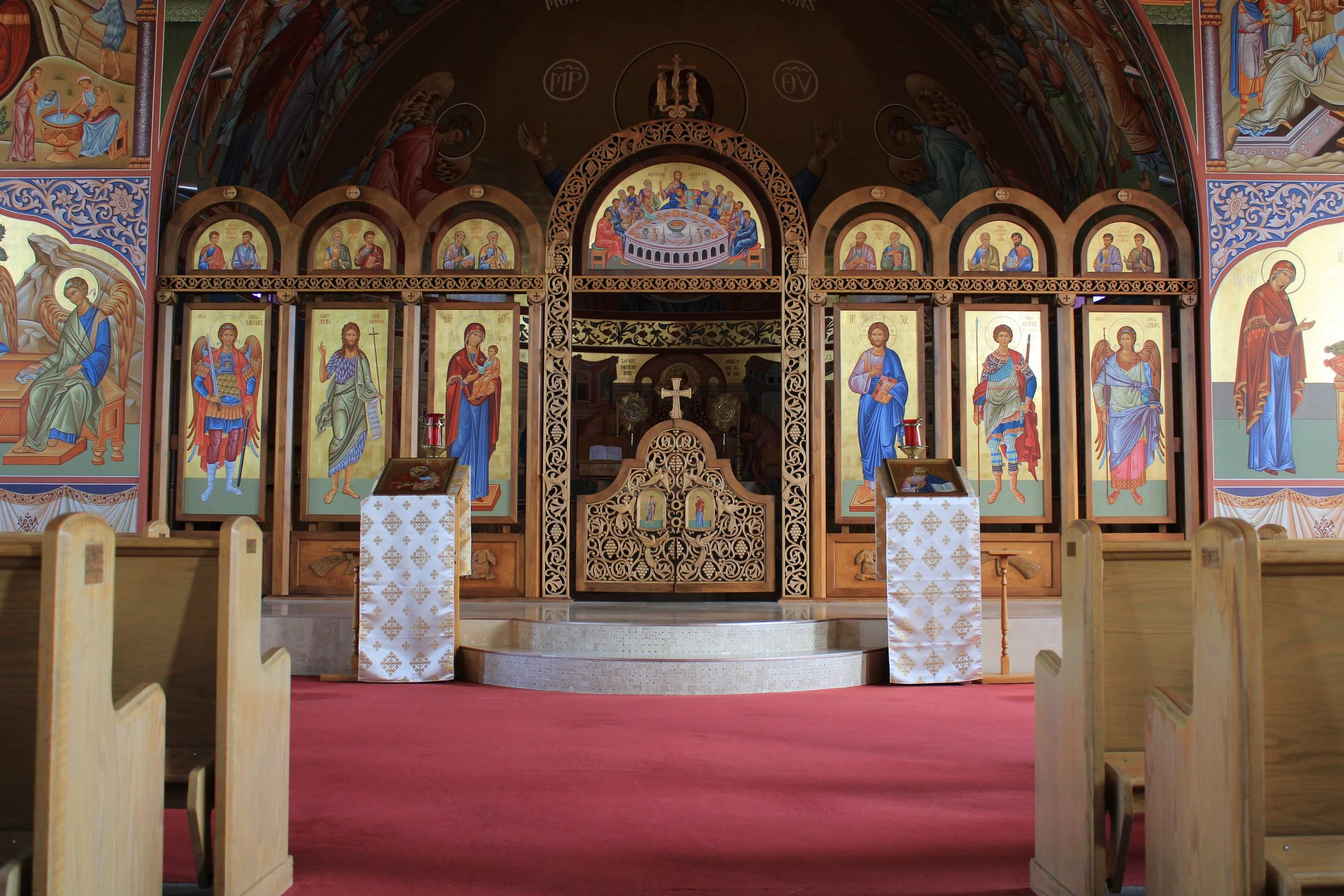
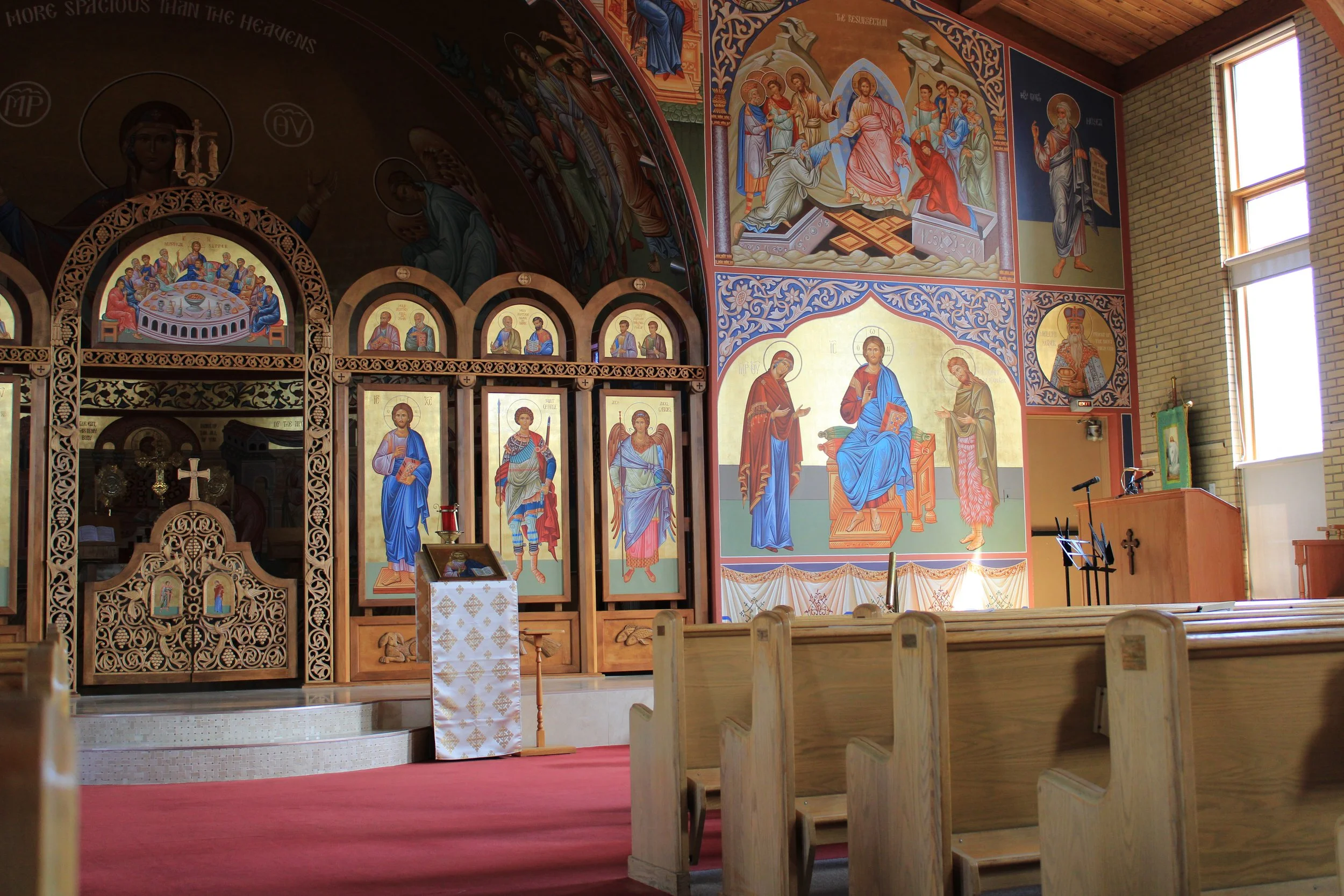
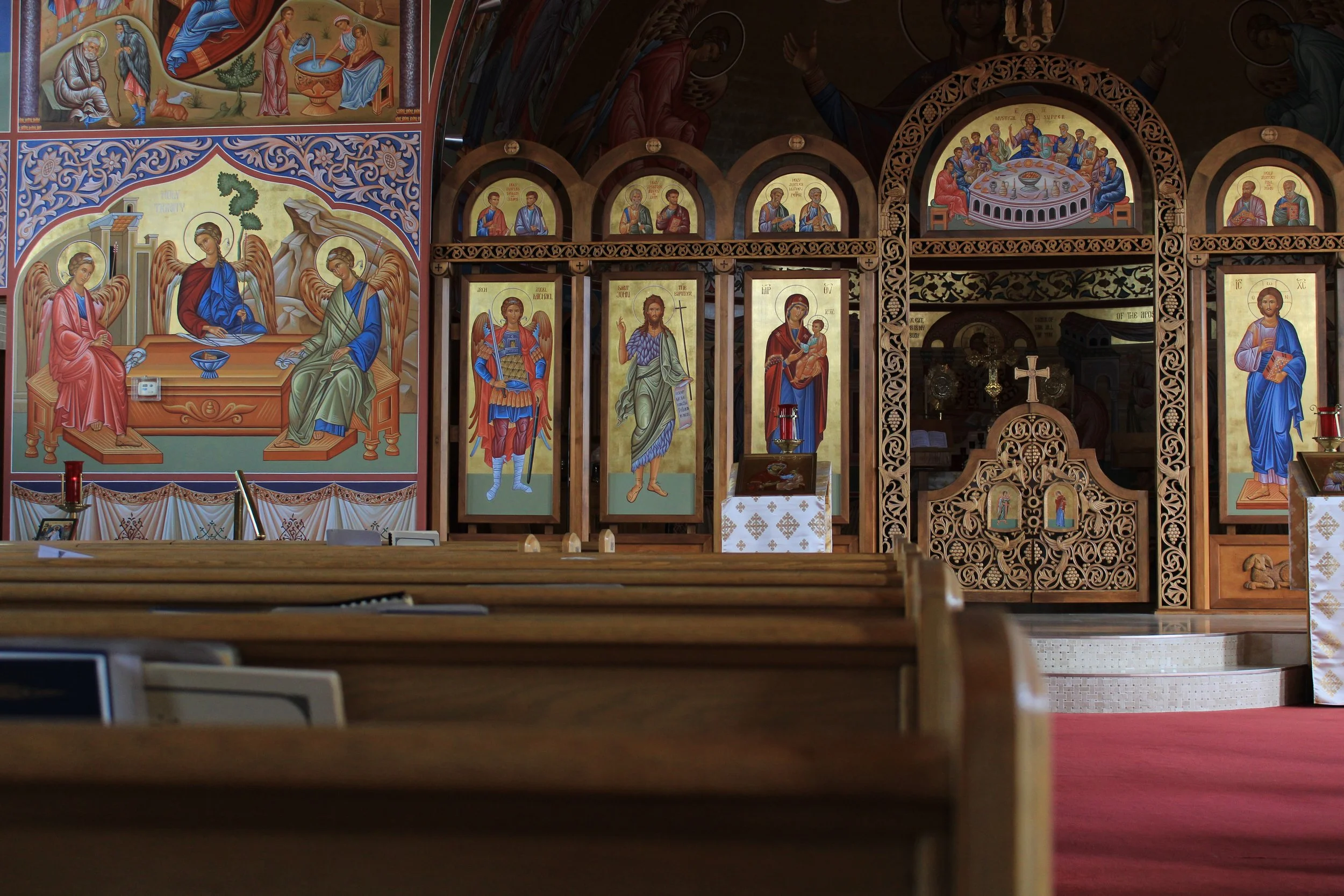
The Top Row
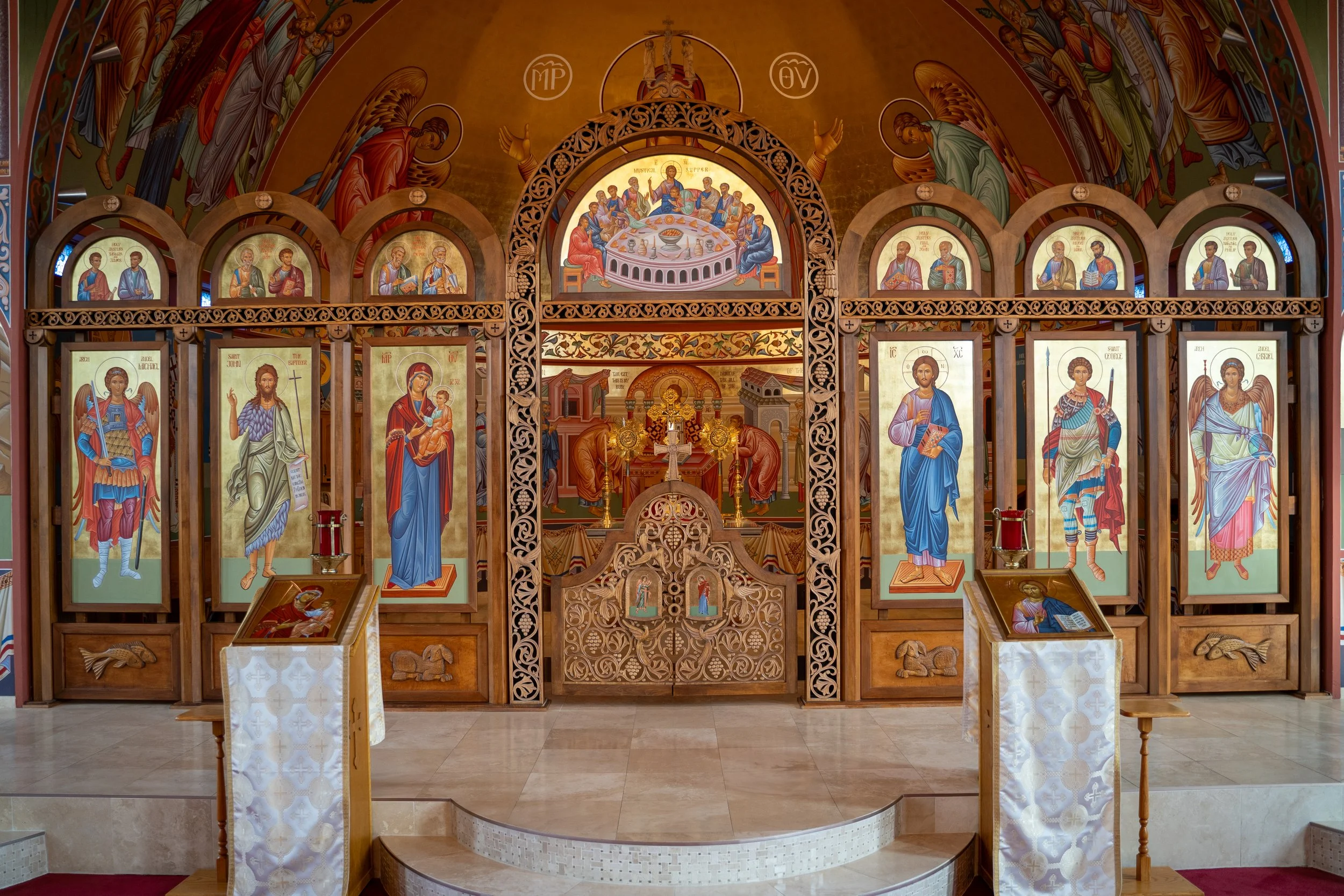
The Twelve Apostles: Spanning the top row are the twelve disciples: Simon Peter, Andrew, James (son of Zebedee), John, Philip, Bartholomew (Nathanael), Thomas, Matthew (the tax collector), James (son of Alphaeus), Thaddaeus (or Jude), Simon the Zealot, and Paul.
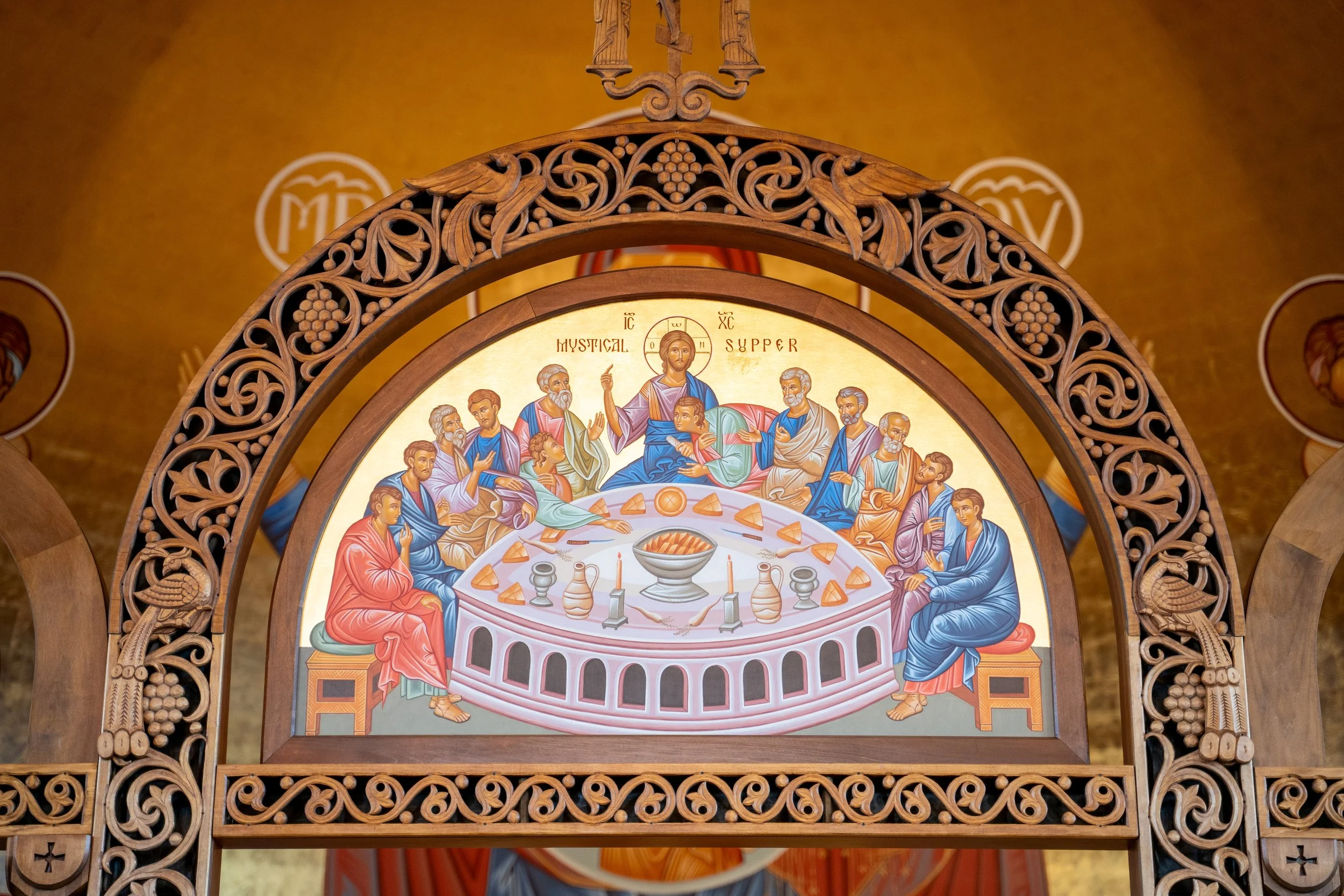
The Mystical Supper: Positioned halfway through the top row, directly in the center above the altar entrance, is the icon of the Mystical Supper.
The Bottom Row
The bottom row features the following foundational figures:
Archangel Michael
St. John the Baptist
St. Mary the Theotokos
Our Lord Jesus Christ
Our Patron St. George
Archangel Gabriel
Surrounding Symbolism
The iconostasis is surrounded by intricate flora and fauna, each carrying deep theological meaning:
Grape Vines: * Symbolize Christ as the "True Vine."
Represent the sacrament of the Eucharist through the grapes.
Represent the Mother of God, who is known as "the true vine who bears the cluster of life."
Symbolize the Church itself.
Doves: * The Holy Spirit: The primary symbol of the Holy Spirit, originating from the baptism of Jesus where the Spirit descended "like a dove."
Peace and Reconciliation: Stemming from the story of Noah (Genesis 8:11), the dove returning with an olive branch represents peace between God and humanity after the flood.
The Virgin Mary: The Theotokos is sometimes referred to as the "Beautiful Dove" (e.g., in Coptic hymns), symbolizing her purity and her role in bringing the news of salvation.
The Soul: Represents the purity of the human soul or its release from earthly duties.
Peacocks:
Resurrection and Renewal: Because peacocks shed and regrow their magnificent plumage annually, they represent the renewal of life and the resurrected soul.
Paradise and Heaven: Frequently depicted in early Christian mosaics (such as in the catacombs), peacocks symbolize the beauty of the afterlife. They are often shown drinking from a fountain or vase, which represents the soul drinking from the waters of eternal life.
-
The Scene and the Betrayal
The Setting: The icon portrays Christ and the Apostles seated around a table, with their respective gazes and physical positions conveying the narrative to the viewer.
The Revelation: The moment captures Jesus revealing that He will be betrayed. Christ meets the eyes of the disciples who are looking directly at Him.
The Bewilderment: Other disciples are shown reacting with confusion to the Savior's words, visually representing the scriptural moment: "Then the disciples looked at one another, perplexed about whom He spoke."
The Institution of the Eucharist
The Divine Liturgy: The icon also captures the foundational moment of the Holy Eucharist, which is the basis for the Orthodox Divine Liturgy.
The Bread: The sanctified bread—representing the Body of Christ—is depicted as already broken and distributed to the Apostles.
The Cup: The cup of sanctified wine—representing the Blood of Christ—rests on the table, awaiting its passage to the disciples.
Theological Unity: This imagery reflects the profound prayer from the Divine Liturgy of St. Basil the Great, illustrating the hope that "all may be united who become partakers of the one Bread and Cup in the communion of the Holy Spirit."
-
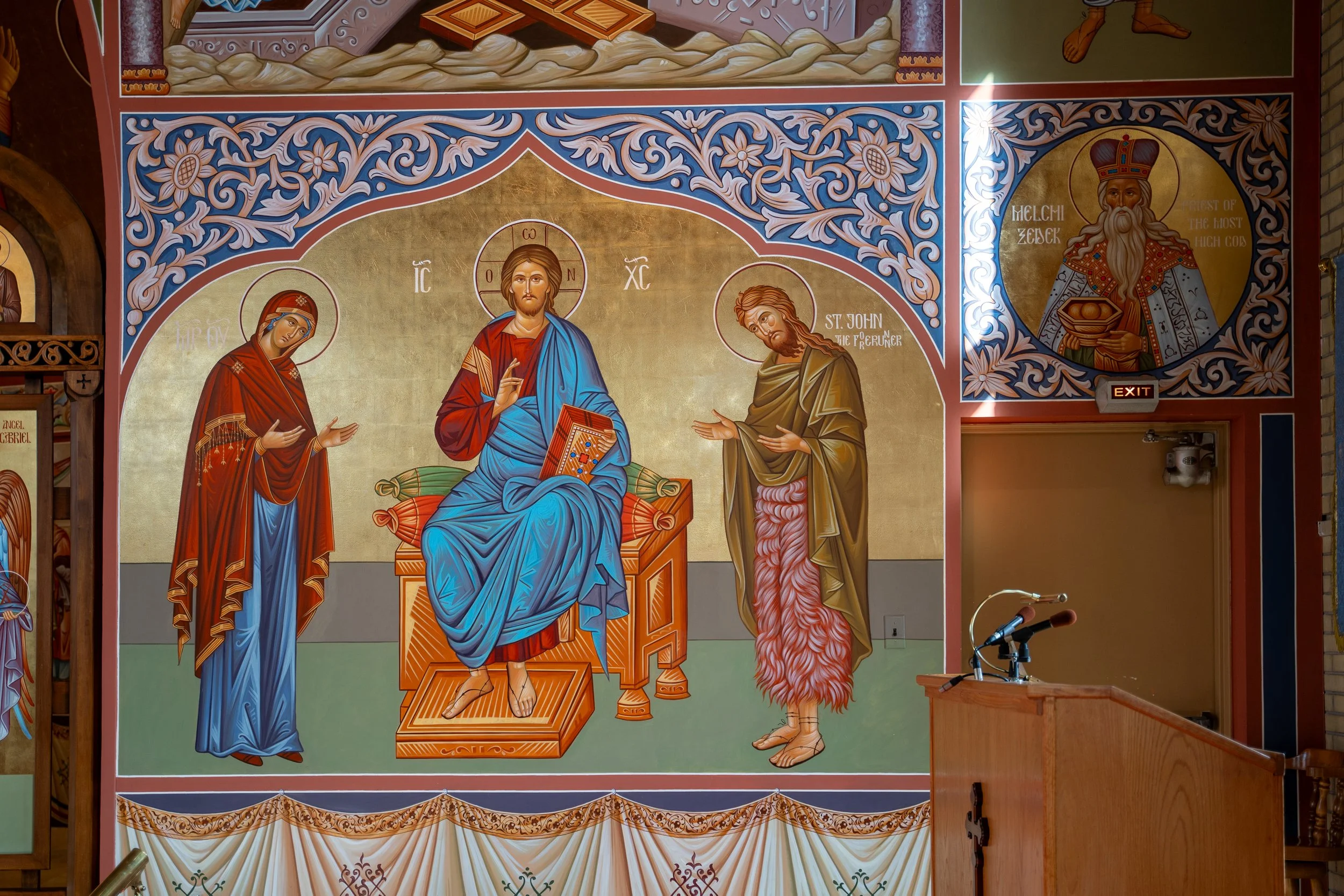
The specific area of the Orthodox Last Judgment icon that features Christ flanked by the Virgin Mary and St. John the Baptist is known as the Deesis (or Deësis), which translates from Greek as "prayer" or "supplication."
The Visual Layout
Christ the Judge: Christ is positioned in the very center, typically seated on a throne and enclosed in a mandorla (an almond-shaped or circular aura representing uncreated divine light). He is depicted as the Pantocrator (Ruler of All) and the Righteous Judge. He usually holds an open Gospel book and His right hand is raised in a gesture of blessing or judgment.
The Supplicants: To Christ's right stands the Virgin Mary (the Theotokos or Mother of God), and to His left stands St. John the Baptist (known in the East as the Forerunner).
The Posture: Both Mary and John are depicted turned toward Christ. Their heads are bowed in reverence, and their hands are extended forward in a universal gesture of prayer, entreaty, and submission.
The Theological Meaning
Intercession for Humanity: The primary meaning of the Deesis is intercession. As the terrifying events of the Last Judgment unfold and humanity is being judged, Mary and John are actively praying to Christ on behalf of the world. They represent the ultimate hope for divine mercy.
The Bridge Between Eras: In Orthodox tradition, Mary and John the Baptist are considered the highest, most spiritually pure of all human beings. John is the pinnacle of the Old Testament (the last and greatest prophet who prepared the way), while Mary represents the dawn of the New Testament (the one who physically bore Christ). Together, they represent the entirety of human history crying out for salvation.
Justice Tempered by Mercy: The Last Judgment is fundamentally about the final, objective accounting of souls. Christ, as the judge upon the throne, embodies absolute divine truth and justice. The Deesis introduces the necessary balance of grace; Mary and John represent the Church's ceaseless prayer that God's mercy will ultimately temper His strict judgment.